By Kokab Rahman, Founder & CEO, Radeya Global
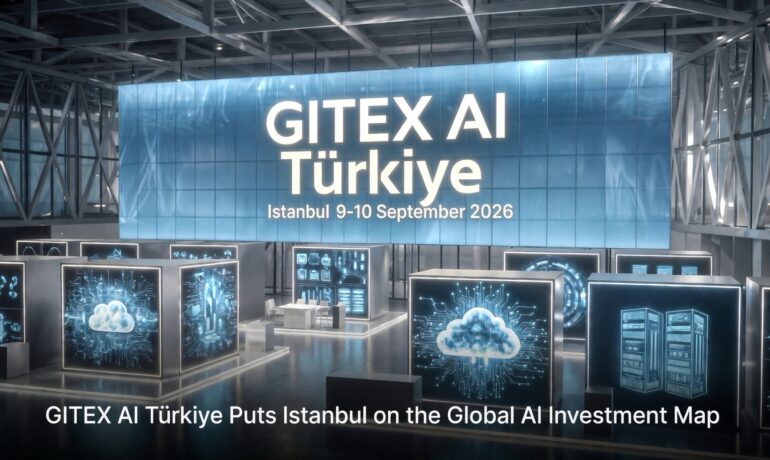
Istanbul is hosting a concentrated two-day test of where capital, compute, and talent will meet next. GITEX Ai Türkiye opened on 9 September 2026 at the Istanbul Expo Center and continues through 10 September. It is the first GITEX edition in Türkiye, hosted by the Presidency’s Investment Office with the Ministry of Industry and Technology, and it is built around a simple claim: Eurasia wants a larger share of the AI economy, not only as a market but as a place to build infrastructure and companies.
That framing matters for executives deciding where to expand, for businesses looking for partners, and for job seekers tracking which skills and geographies will attract hiring.
What is actually happening in Istanbul
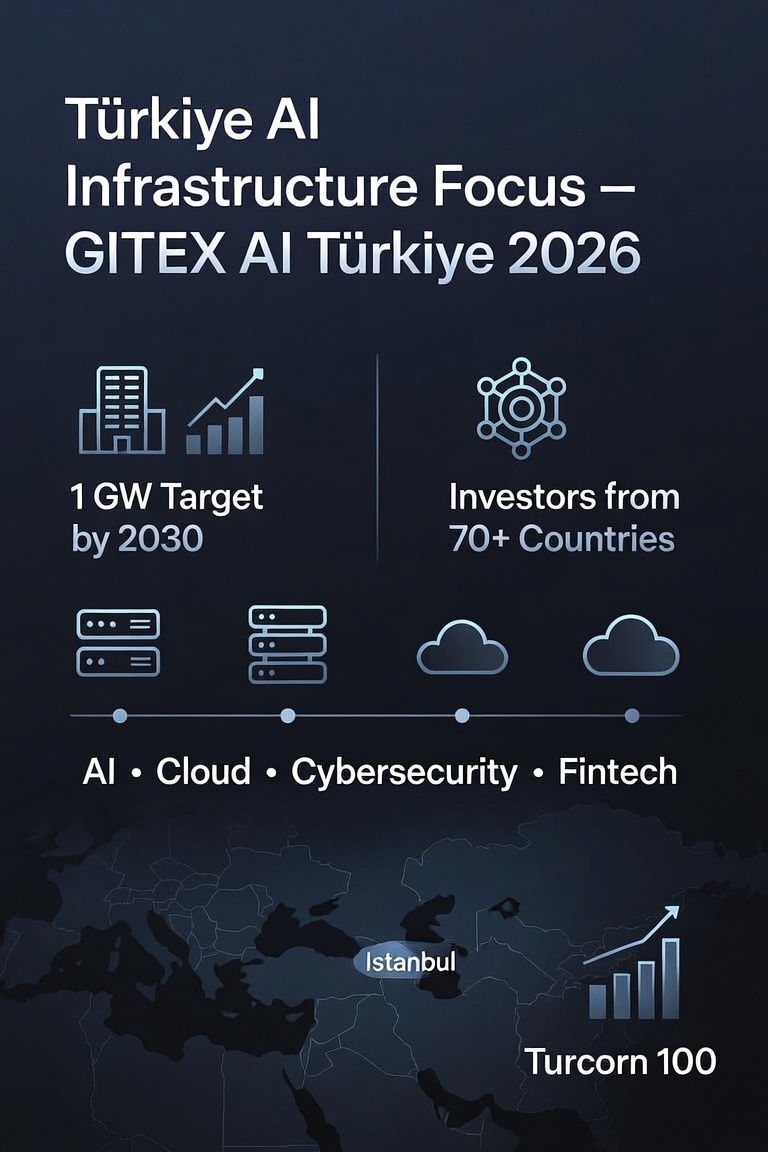
The event brings together startups, scale-ups, investors from more than 70 countries, policymakers, and enterprise technology vendors. Themes include AI, cybersecurity, fintech and digital assets, e-commerce, cloud, and data-center infrastructure. Global exhibitors named in coverage include Google Cloud, NVIDIA, HPE, ASUS, Dell Technologies, Huawei, SAP, and TrendAI. Twenty-four companies from Türkiye’s Turcorn 100 program are also on the floor, a signal that local growth-stage firms are being positioned for international capital and customers.
The policy hook is concrete. A panel titled “The 1GW Countdown” focused on Türkiye’s target of at least one gigawatt of installed data-center capacity by 2030. Speakers discussed implementation, permits, and grid connections — the unglamorous constraints that decide whether AI strategy becomes usable compute. Other sessions covered enterprise readiness beyond 2027, smart factories moving from pilots to production lines, automated agents in customer service, finance and HR, and retail systems that can deliver real-time personalization.
This is not a consumer-tech show. It is a trade and investment event: pre-arranged meetings, sourcing across the tech stack, and a pitch that Türkiye can sit between European demand and Asian supply chains.
Why the timing is commercially relevant
Türkiye has been marketing a growing base: more than 1,000 AI-focused startups in recent official comments, a large network of R&D and technology development zones, and an ICT market organizers have projected toward the mid-to-high tens of billions of dollars over the coming years. The 1GW data-center target is the infrastructure version of that story. AI workloads do not scale on slogans; they scale on power, land, cooling, chips, and operators who can run facilities under real regulatory and energy constraints.
For executives, the implication is familiar from other regions racing to host AI infrastructure. Countries that can offer capacity, talent, and a path to customers will attract vendors and capital. Countries that cannot will still buy software — but they will not capture the higher-value jobs around data-center operations, applied AI, cybersecurity, and industrial deployment.
The vendor list also tells a hiring and partnership story. NVIDIA, HPE, Dell, Google Cloud, SAP, and Huawei are not attending a regional debut only for brand visibility. They are looking for enterprises that will move from pilots to production, and for local partners who can implement, secure, and support those systems.
What this means for job seekers
Demand will not show up as a single “AI job” category. It will show up as roles that sit next to infrastructure and implementation:
- Data-center, cloud, and network operations as capacity targets become real projects
- Cybersecurity and governance as automated agents enter finance, HR, and customer operations
- Manufacturing and quality roles that can work with AI on the factory floor rather than only in a slide deck
- Product, sales-engineering, and partnership roles that can sell and integrate enterprise AI across borders
- Talent that can work in English plus regional languages, because the buyer and vendor mix at GITEX is explicitly international
If you are mid-career, the useful signal is not “learn a chatbot.” It is: can you show a result in a real workflow — production, risk, customer operations, or infrastructure — that a flatter organization would still pay for?
What this means for executives and businesses
Three practical takeaways sit above the keynote language.
First, infrastructure is becoming strategy. A 1GW target is a planning number, not an installed fact. Companies that need reliable AI capacity should treat power, latency, data residency, and vendor lock-in as board-level issues, not IT footnotes.
Second, partnerships are the product. An event designed around pre-arranged meetings is an admission that most firms will not build the full stack alone. The winners will be operators who can choose vendors, govern agents, and measure ROI — not those who collect tools.
Third, the talent market will follow the compute and the customers. If Istanbul succeeds as a convening point for Eurasian AI investment, hiring will concentrate around implementation, security, and industrial AI rather than only model research. That is the same pattern visible in other AI hubs: research headlines first, then a much larger wave of applied roles.
Stay focused on skills and partnerships that survive a tighter org chart and a higher bar for measurable outcomes. The map is shifting toward places that can host both the machines and the people who put them to work.
About Radeya Global
At Radeya Global we help professionals and businesses turn market signals into practical advantages — through targeted career strategy, resume and profile optimization, interview preparation, and custom business advisory support.
Ready to take action? Explore our career optimization and job search services, or reach out for business consulting support. Email services@radeya.biz or visit www.radeya.biz.
What career or business challenge are you navigating right now? Share in the comments or get in touch — let’s turn insights into progress together.
Radeya Global – Premium Business & Career Solutions.